

“We use the honey for food and medicine. For food we use it with coffee, bread. For medicine we use it for bronchitis, pneumonia, burns, skin cuts, colds, arthritis.”
 What is STINGLESS BEE?
The Apis Mellifera or European honeybees and the Trigona or Stingless honeybees are the most common bees. Stingless bees come under two classifications namely the Melipona and the Trigona, both of which play an important role in the pollination of flowers.

Stingless bee honey is one of the most complex natural foodstuffs. This type of honey quantitatively possesses a higher moisture content, greater acidity, a slightly lower level of total carbohydrates, and higher levels of antioxidant and biological activities than Apis mellifera honey.

Like the more well-recognized honeybees (Apis mellifera), these bees live in permanent colonies made up of a single queen and workers, who collect pollen and nectar to feed larvae within the colony and likewise store honey in the hive for this purpose.
There were about 500 stingless bee species that had been reported in Afrotropical, Indo-Australian and Neotropical provinces with the highest diversity species originating in the Neotropical. Due to its high nutritious and medicinal values, recently, stingless bee honey has been highly demanded by the food, pharmaceutical and even cosmetic industries.
What is honey?
Honey bees live in colonies called hives, and they fly away from their hives to forage for pollen, propolis and nectar. The nectar is what is used to make honey, and is extracted from various flowers using the bee’s tongue and is stored in its crop – the “honey stomach”. Bees actually have not one, but two stomachs – one for eating, and another for honey. When its honey stomach is completely full, bees can almost double its weight.
When honey bees fly back to the hive, they begin to secrete enzymes that help to change the acidity and composition of the nectar to make it suitable to keep a long time. Upon its return, the forager bee will regurgitate what’s in its crop, and pass it onto a house bee. This process is called trophallaxis.
House bees then process the nectar internally, chewing it and adding more enzymes into it, which breaks down the complex sugars into simple sugars. After this, it is placed into the cells of beeswax. Over time, bees will dehumidify the nectar by fanning it with their wings, taking the moisture away from the nectar, creating the syrupy and gooey honey that we know.
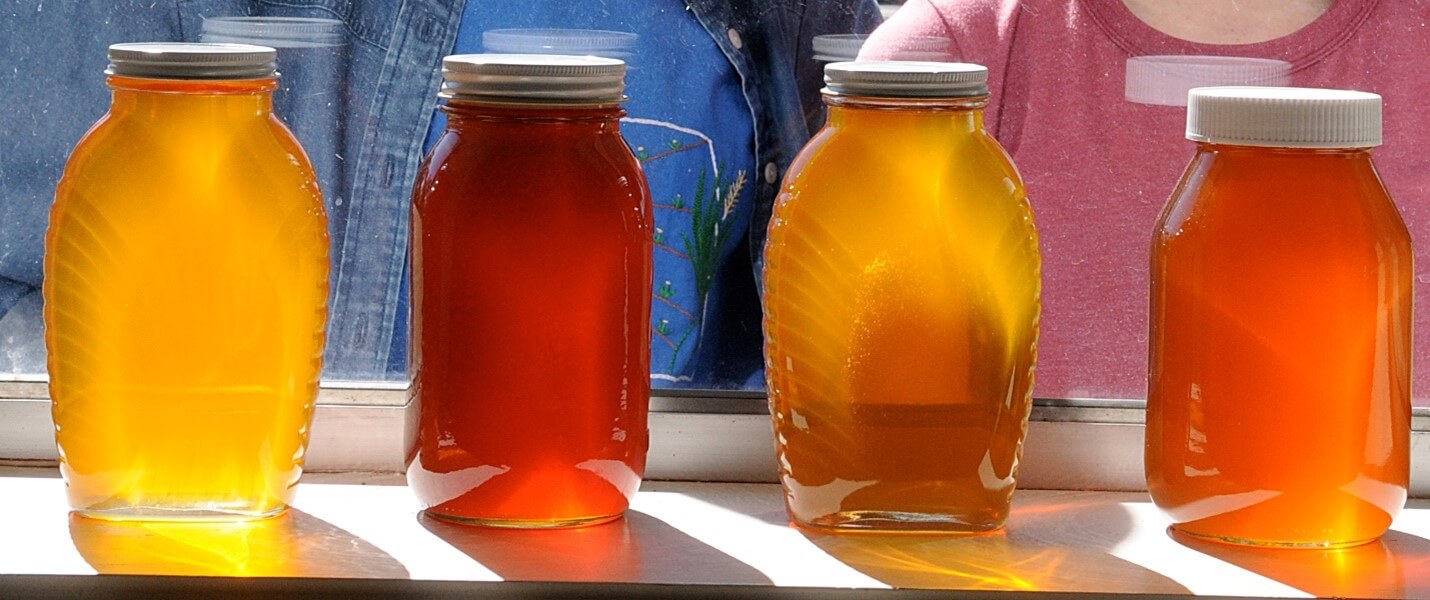
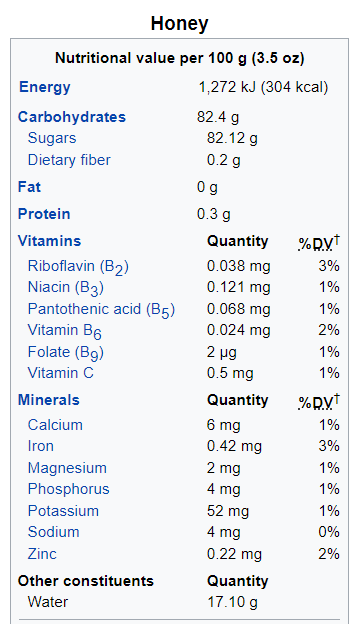
Each type of honey differs by the type of flower the honeybees visit to extract nectar. One hundred grams of honey provides about 1,270 kJ (304 kcal) of energy with no significant amounts of essential nutrients. Composed of 17% water and 82% carbohydrates, honey has low content of fat, dietary fiber, and protein.
Stingless and Common bee honey
| Stingless Bee Honey | Normal Honey |
|---|---|
| High-water content of around 25% | Low-water content |
| A sour and sweet taste | A sweet and so sweet taste |
| Have Trehalulose – a low glycaemic index sugar | No Trehalulose |
| stingless bees produce way less honey | produce way much more honey |
Honey is a natural product produced and marketed worldwide by stingless bees and Apis bees. Both these types of honey contain unique and distinct compounds of variable nutritional and biological importance. Stingless bee honey is popular for its distinct sweetness, mixed with an acidic taste, and fluid texture; it has higher added value than Apis mellifera honey.
Stingless bee honey has a low pH; that is between 3 and 4.5, it is acidic and hence most microorganisms are unable to survive in such conditions.
The key difference between stingless and stringing bee honey is one kind of sugar (carbohydrates) named trehalulose in the stingless. Unlike other honey or in any food, up to 85% of the sugar content in stingless bee honey is made up of dissacharide trehalulose, a rare, low glycemic (GI) index sugar with a sweetness of up to 75% of common sugar. To-date, stingless bee honey is the only natural wholefood found with major pure natural trehalulose sugar component. Trehalulose is more slowly digested and there is not the sudden spike in blood glucose that you get from other sugars.
Moreover, the stingless bee honey contains 3x more antioxidants than honey from stinging bees. Antioxidants are agents that save cells from the harmful effects of reactive oxygen species. Overall, the stingless honey has lower level of calories and kill more harmful bacteria than from stinging bees.
A colony have about 5000 bees. A colony produces less than 5kg per year which is why it is expensive. More over, due to its high nutritional value and unique flavor, this honey is relatively higher-priced.
HEALTH PROPERTIES OF STINGLESS BEE HONEY
Treating Diabetes | Reduce Cholesterol | Cures Cold & Cough | Improve Body Immunity System | Heals wound in Stomach | Improves blood circulation | Provide quick energy | Sound Sleep
High water content along with salivary enzymes secreted from stingless bee honey creates perfect conditions for microorganism activities. Probiotic microorganism activity promotes healthy guts and boost immune system as well as helps to enrich and conserve the quality in stingless bee honey.
HOW TO USE HONEY EFFECTILY?
- Drink a teaspoon of honey before go to bed or in the morning with warm water.
- Use as a “healthy-sugar element” in daily activities.
- Use as a medicine when get wounded or even burnt.
Notice:
- Maximum 30gram honey for each person per day.
- Using honey with warm water not boiling water.
- Only one year old children can use honey.

Buying stingless bee honey in VietNam with limited quantity reach via Mr Nam +84 944-544-345 | +84 378 091 240 (Zalo or WhatsApp, KakaoTalk)
These honey are raw, unprocessed and unheated. They are all sourced directly from the hive, so you get to experience the natural taste profile, as if you are drinking directly from the hive’s honey pots!

Download pdf file here:


 CHẠM KHÁNH HOÀ